


Lever Handle Repair
A lever handle that sticks, spins freely, or won't retract the latch can turn a routine entry into a real problem. We diagnose and fix lever handle issues on interior doors, exterior doors, and commercial entryways throughout Maryland.
Lever handles are the most common door hardware in Maryland homes and commercial buildings. They're built to handle thousands of cycles, but the internal mechanism — the spindle, latch, spring cartridge, and rosette — eventually wears out or gets knocked out of alignment.
When customers call us about a lever handle problem, the complaint usually falls into one of a few categories: the lever droops and won't spring back, the latch doesn't catch properly when the door closes, the handle turns but nothing happens, or the lever is physically loose on the door. Each of these points to a specific part of the assembly, and knowing which part is the issue determines whether a repair is practical or a full replacement makes more sense.
We work on lever handles on bedroom and bathroom doors, front entry doors, office suite entries, utility rooms, and any other door where a lever-style handle has been installed. The same lever mechanism shows up across a huge range of finishes and brands, so the underlying repair process is very similar regardless of what the hardware looks like on the surface.
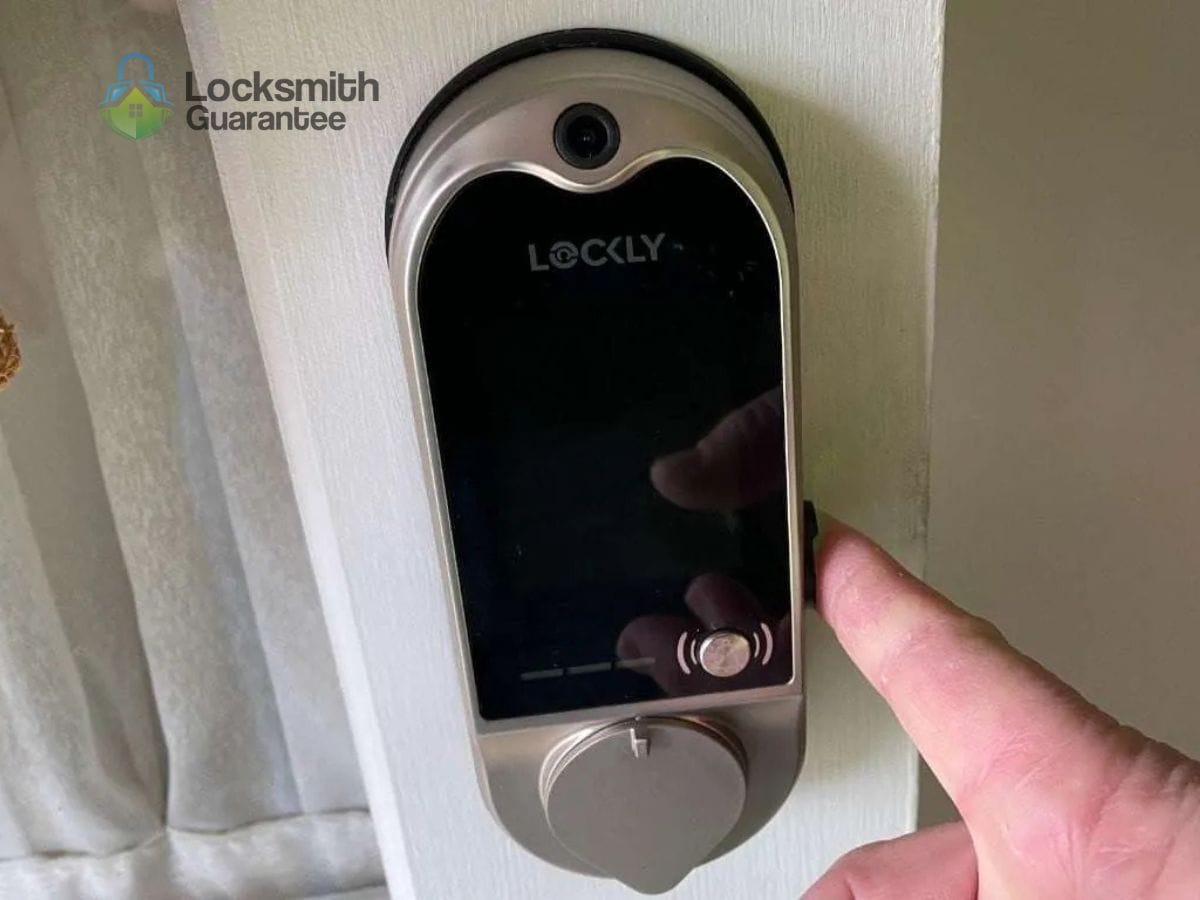
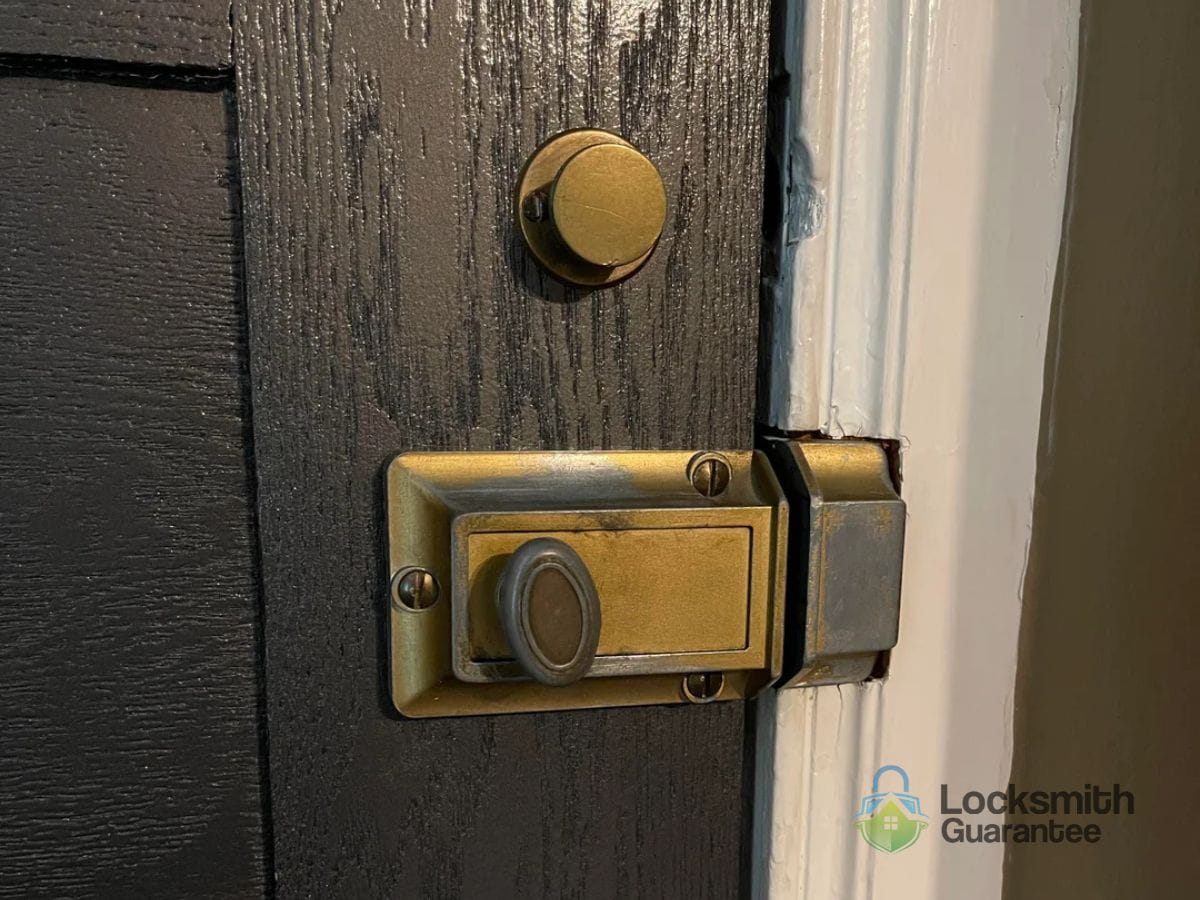
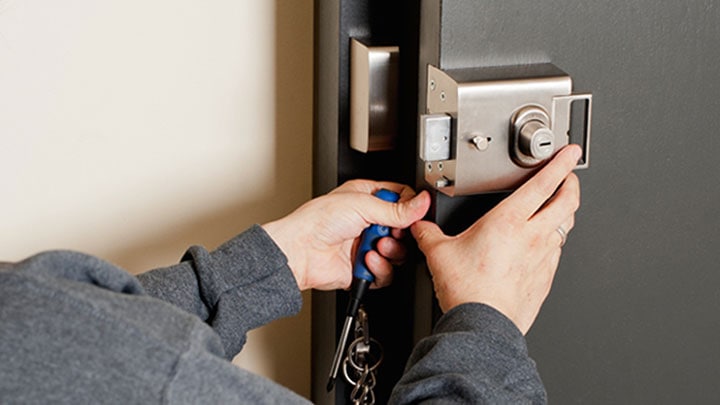
Most lever handle failures don't happen overnight. There's usually a warning period where the handle feels different than it used to — slightly stiff, or maybe it springs back a little slower. By the time someone calls us, it's usually gotten to the point where the door is genuinely hard to use. Here are the specific symptoms we see most often.
Lever handles fail for a few different reasons, and the cause matters because it changes what the fix looks like. Understanding what's actually happening inside the assembly is what separates a real repair from a temporary patch.
The spring cartridge inside a lever handle is under constant stress. Every time someone operates the door, that spring compresses and releases. Most residential levers are rated for a certain number of cycles, and when that count is reached, the spring simply stops returning the lever to position. This is the most common reason we get lever handle calls, and it's entirely normal. The parts themselves are inexpensive — the cost is really in diagnosing the problem and having the right replacement components on hand.
The spindle is the square or rectangular rod that connects the two sides of a lever handle and transfers the rotation of the lever into motion at the latch. In cheaper hardware, the spindle is sometimes made from a softer metal that can strip or shear after years of use. When this happens, the lever moves freely but the latch doesn't respond. In some cases the spindle is a separate part that can be swapped out; in others, the full lockset needs to come out.
Maryland homes deal with humidity shifts through the seasons, and wood doors swell and contract as a result. If a door has dropped even a few millimeters on its hinges, the latch bolt may no longer line up cleanly with the strike plate. This causes the lever to feel heavier than normal and can eventually damage the latch mechanism. We see this often in older homes in areas like Rockville, Hyattsville, and Columbia where the housing stock includes a lot of frame construction that has shifted over decades.
Levers on commercial doors in particular take a lot of abuse — being pushed open with carts, kicked when hands are full, and generally subjected to more force than they were designed for. A lever that has been bent or had lateral force applied to it can crack at the shank, strip the set screw collar, or pull the rose plate away from the door. Depending on the severity, this may need more than just a new part.
We see this regularly when work was done previously by someone who wasn't a locksmith. A lever handle installed with the wrong handed orientation, mounted to a door that's too thick or too thin, or set up with a spindle that's the wrong length will fail reliableer than properly fitted hardware. Mismatched parts accelerate wear at every friction point in the assembly.
This is the question people most often want answered before we arrive. The honest answer is that it depends on three things: the condition of the existing hardware, how well it was installed originally, and whether matching parts are still available for that particular unit. We walk through this with every customer before recommending anything.
| Situation | Repair Usually Enough | Replacement Worth Considering |
|---|---|---|
| Spring cartridge worn out, lever won't return | ✓ Yes | Not usually |
| Spindle stripped or sheared | Sometimes | If spindle is part of the body |
| Loose handle, set screw issue | ✓ Yes | Not usually |
| Latch bolt worn, not catching strike | ✓ Yes (new latch body) | Not usually |
| Strike plate misalignment from door settling | ✓ Yes (adjust strike) | Not usually |
| Handle body cracked or bent from impact | Not recommended | ✓ Yes |
| Hardware more than 15–20 years old, parts unavailable | Case by case | ✓ Often better value |
| Original installation was incorrect | Repair won't last | ✓ Start fresh |
When replacement is the better path, we don't automatically reach for the most expensive option. We carry a range of hardware that fits different door preparations and budgets, and we'll show you what makes sense for the specific door before we do anything. Our goal is to fix the actual problem, not to sell more hardware than the job requires.
Lever handle repair isn't a single task — it's a diagnostic process that ends with whatever the door needs. Here's what falls under this service when we come out.
- Spring cartridge replacement on interior and exterior lever sets
- Spindle replacement and alignment
- Latch body replacement and adjustment
- Strike plate realignment and mortise correction
- Rose plate and backplate reseating
- Set screw inspection and tightening
- Full lever handle unit swap when parts aren't available
- Handed orientation correction (left-hand vs right-hand install)
- Deadbolt compatibility check on combination entry sets
- Lubrication and cycle testing after every repair
- Commercial panic hardware lever component repair
- Re-keying if a cylinder is part of the lever set and keys need updating
If you're dealing with a lever on a combined lockset — one with a keyway in the lever itself — we handle the lock side and the mechanical side together. You don't need separate appointments for the hardware and the cylinder.
We try to keep this straightforward. Here's what to expect when you call us for a lever handle problem.
Describe the symptoms and we'll ask a few questions about the door type, handle style, and whether there's a lock cylinder involved. This helps us confirm we have the right parts before showing up.
We pull the handle off and inspect the internal mechanism, spindle condition, latch assembly, and strike alignment. Most of the time the cause is obvious once the trim is removed.
We tell you what's wrong, what it will take to fix it, and what a replacement would cost if repair isn't practical. No work starts until you've agreed on the approach and the price.
We carry common replacement parts and hardware in the service vehicle. Most lever handle jobs finish in a single visit. If a specific part has to be sourced, we'll tell you the timeline upfront.
Before we leave, we cycle the lever multiple times, verify the latch fully engages the strike, and make sure the handle returns cleanly to position. If anything feels off, we adjust until it's right.
Lever handle issues come up in every type of property. We work on single-family homes, apartment units, condos, small offices, retail spaces, and larger commercial buildings. The hardware varies, but the diagnostic process is the same.
On the residential side, we see a lot of lever handle calls from townhome communities in areas like Bowie and Laurel, where older door hardware is starting to reach the end of its life. Many of these homes were built with builder-grade lever sets that have now been in service for 15 or 20 years. The fix is usually a spring cartridge swap or a latch body replacement — simple parts, but not something most homeowners have on hand.
On the commercial side, office suites and retail locations in Bethesda, Silver Spring, and Greenbelt tend to run their hardware much harder than residential properties. High-traffic doors with lever handles can go through several thousand cycles a month. When those levers start failing, it creates a real access problem during business hours.
We cover all of Maryland, including Montgomery County, Prince George's County, Howard County, Anne Arundel County, and Baltimore County. If you're in a community not listed, call us and we'll confirm coverage.
Lever handle repair is one part of a broader range of door hardware and lock services we offer across Maryland. If the issue with your door goes beyond just the handle, or you want to address other access points while we're there, here's what else we handle.
Need a Lever Handle Repaired in Maryland?
Call us to schedule a visit or ask a question about your door hardware. We serve residential and commercial properties throughout the state.