
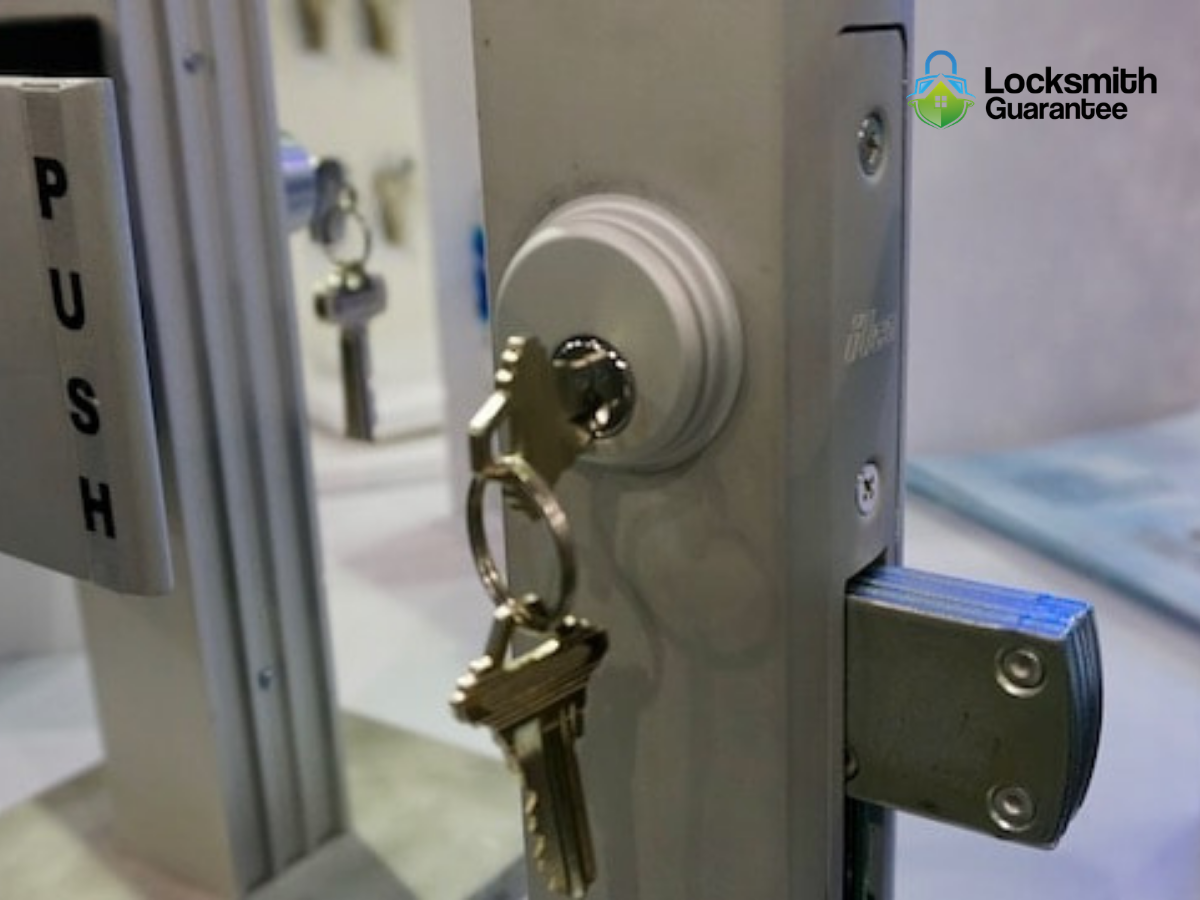
Lock rekeying alters the internal pin tumblers of an existing lock cylinder so old keys permanently cease functioning while newly cut keys operate the door smoothly. In Prince George’s County, MD, rekeying is significantly more economical than replacing healthy deadbolts and mortise locks during home moves, tenant turnovers, or contractor departures, delivering complete key control without altering your door trim.
What Is Lock Rekeying?
Lock rekeying is the precision process of replacing the internal bottom and master pins inside a lock cylinder to match a new key cut without discarding the exterior deadbolt, knob, or lever hardware.
When our mobile locksmith rekeys a lock, the exterior casing, latch mechanism, bolt, and decorative escutcheon remain firmly installed on your door. The technician removes the inner plug, empties the existing brass pin stacks, and re-pins the chamber using calibrated color-coded pins matching the exact depths of a new operating key. Once reassembled, any prior key that once turned the lock becomes completely ineffective at the shear line.
Why Property Owners in Prince George’s County Rekey Their Locks
Prince George’s County encompasses diverse residential communities, bustling university corridors, and thriving commercial centers – from historical neighborhoods in Hyattsville and Mount Rainier to modern master-planned communities in Bowie, Upper Marlboro, and Greenbelt. Each setting presents distinct key control challenges:
Home Buyers in Bowie & Upper Marlboro
During a home purchase, dozens of unaccounted keys may circulate among prior owners, subcontractors, real estate agents, home inspectors, and neighborhood family members. Rekeying secures your perimeter on closing day.
Rental Turnover in College Park & Hyattsville
Student housing and multifamily apartment communities experience frequent tenant transitions. Certified rekeying protects upcoming residents against unauthorized entry from previous leaseholders.
Commercial Suites in Greenbelt & Laurel
Corporate offices and retail storefronts regularly experience staff turnover or contractor access requirements. Rekeying internal mortise or rim cylinders establishes disciplined access hierarchies.
How Cylinder Rekeying Works: Step-by-Step Mechanical Process
Precision rekeying requires calibrated pin gauges, plug followers, and specialized tweezers to ensure the cylinder operates reliably without binding. Here is how our certified Maryland mobile locksmiths complete cylinder rekeying on-site:
- Hardware Assessment and Keyway Identification: The locksmith inspects the manufacturer brand (such as Schlage C, Kwikset KW1, Yale, Arrow, or Corbin Russwin) to determine pin spacing and root-depth tolerances.
- Cylinder Plug Removal: Using a plug follower, the technician slides the inner brass core out of the housing while keeping the upper driver pins and tiny coil springs under controlled compression.
- Pin Chamber Decoding: The old bottom pins are cleared out. The technician examines the chamber for excessive wear, metal shavings, or burrs that could compromise operation.
- Loading New Pin Stacks: Using high-precision factory pin specifications, new bottom pins are seated into each flute. When the new key is inserted, each pin aligns flush with the cylinder’s shear line.
- Reassembly and Field Testing: The cylinder is re-seated into the exterior housing, retaining clips are secured, and the lock is lubricated with PTFE dry film to repel dust and moisture before reinstallation on your door.
Rekeying vs. Full Lock Replacement: Key Comparison
Homeowners and facility managers often wonder whether they should rekey their existing locks or invest in entirely new lock sets. The table below outlines the practical differences:
| Comparison Factor | Lock Rekeying Service | Full Lock Replacement |
|---|---|---|
| Primary Objective | Deactivate old keys and issue new operating keys. | Upgrade security grade, finish, or functional lock style. |
| Hardware Replaced | Only internal brass bottom pins and wafers. | Entire exterior chassis, internal lock body, bolt, and strike. |
| Average Cost | Substantially lower; saves hardware replacement expense. | Higher; requires purchasing new commercial or residential trim. |
| Architectural Finish | Maintains existing matching door handles and trims. | May require repainting or filling mismatched borehole cuts. |
| Recommended When | Hardware is structurally sound, clean, and functioning smoothly. | Hardware is corroded, broken, or below Grade 2 residential standard. |
Master Key Systems for Local Commercial Buildings & Multi-Unit Properties
For commercial offices, religious facilities, daycare centers, and apartment buildings across Prince George’s County, rekeying allows the creation of structured master key systems. By introducing calculated master split wafers into individual pin chambers, our locksmiths can configure a master key that operates every entrance on the property, while individual sub-master or change keys operate only a single designated office, storage room, or apartment suite.
This organized keying framework simplifies facility management, eliminates heavy key rings for custodial staff, and maintains strict sectional security between public zones and private administrative offices.
Common Mistakes Property Owners Make During Key Changes
- DIY Re-Pinning Without Plug Followers: Attempting to disassemble a pin-tumbler cylinder without a properly sized follower causes top driver pins and springs to launch out, often seizing the cylinder plug permanently.
- Mixing Different Keyway Families: You cannot key a Kwikset cylinder to a Schlage key or vice-versa because keyway millings, blade thicknesses, and pin spacing differ fundamentally.
- Ignoring Door Frame Alignment: If a deadbolt binds when turning into the strike plate, rekeying the cylinder will not correct the underlying jamb sag or seasonal humidity frame swelling. Both alignment and pin geometry must be addressed together.
Frequently Asked Questions
Can all the locks on my home be rekeyed to a single key?
Yes, as long as all locks share the same manufacturer keyway family (such as all Schlage or all Kwikset). If your deadbolts and handles share keyway profiles, a single key can operate every door.
Do I need the original key to rekey a lock?
Having the original key makes the process simpler, but licensed locksmiths can decode or pick the cylinder open to remove the plug even if all original keys are missing.
Does rekeying make a lock weaker or less secure?
No. Rekeying restores original factory security tolerances, deactivates unreturned duplicate keys, and ensures new brass pins rest squarely against fresh factory-cut operating keys.
How often should commercial properties in Maryland rekey?
Commercial facilities should rekey following staff resignations, lost master keys, lease changes, or every twelve to twenty-four months to maintain documented key control records.
Can smart deadbolts with physical keyways be rekeyed?
Yes. Keypad smart deadbolts from Schlage, Yale, and Kwikset feature mechanical key override cylinders that our technicians rekey to match your standard house keys on-site.
Need Lock Rekeying in Prince George’s County?
Locksmith Guarantee provides licensed, dependable mobile lock rekeying for residential and commercial properties across Greenbelt, Bowie, College Park, Laurel, and surrounding Maryland communities.
Call (240) 931-0762 for Scheduling