






Push Pad Fails to Retract Latch Fully
Worn dogging linkages or sagging vertical rods keep top/bottom latches dragging across thresholds and headers. Compare related situations under commercial locksmith in maryland.
Commercial Doors, Exit Hardware & Access • MD License #507
Push bars, panic bars, and crash bars are names commonly used for exit hardware that releases a door from the inside. The right device depends on the door and its intended use.
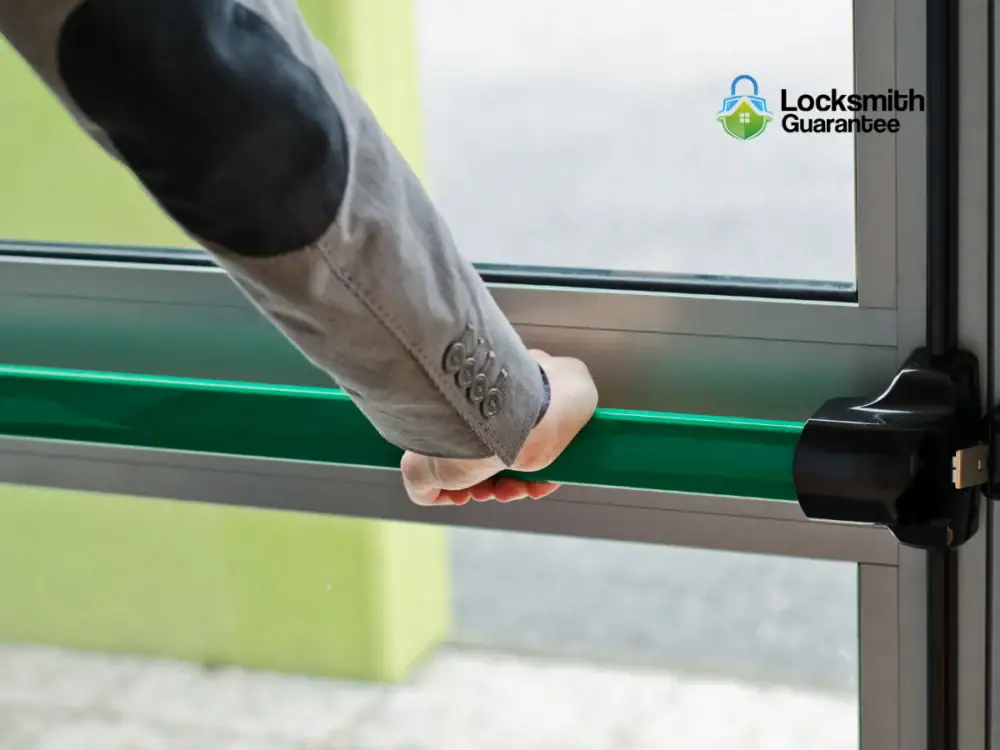
Panic bars and emergency exit devices (push pads, touchbars, and crossbars) allow occupants to unlatch an outward-swinging exit door with a single pushing motion while controlling exterior entry via rim cylinders or lever trim. Identify rim, mortise, or vertical-rod hardware and check the bar, latch, and strike.
Discuss installation, repair, or maintenance and test the door's release and latching functions. A hardware change alone does not establish code compliance; occupancy, fire rating, and applicable requirements must be considered.
Operating mobile workshops out of Greenbelt, Locksmith Guarantee handles panic bar and emergency exit devices across Maryland communities including Hyattsville, Greenbelt, and Bowie (browse Maryland service areas). We also connect this work with commercial locksmith in maryland, ASSA ABLOY commercial hardware, and guidance in our article on evaluating residential and commercial locksmith credentials.
Identify rim, mortise, or vertical-rod hardware and check the bar, latch, and strike. Call (240) 931-0762 with your Maryland location so compatibility and schedule availability can be checked.
Our licensed technician verifies authorization and inspects the assembly: Note the exit device style (rim, surface vertical rod, concealed vertical rod, or mortise), door width (36" vs. 48"), and whether the door carries a fire-exit hardware label (which prohibits mechanical dogging).
Discuss installation, repair, or maintenance and test the door's release and latching functions. You review the exact repair, rekey, programming, or replacement plan and total cost before work begins.
We test completed panic bar and emergency exit devices thoroughly with you on-site—confirming smooth key, latch, closer, or vehicle operation before wrap-up.
Panic bars and emergency exit devices (push pads, touchbars, and crossbars) allow occupants to unlatch an outward-swinging exit door with a single pushing motion while controlling exterior entry via rim cylinders or lever trim.
We service commercial hardware from Corbin Russwin, Sargent, Arrow, ASSA ABLOY group brands, and Schlage commercial series, coordinating mechanical keying with commercial access control systems and property management door schedules. Read our Maryland commercial business security guide for a practical breakdown of commercial hardware planning.

Commercial door system diagram: Hinges/pivots, overhead closers, lock/exit bodies, strikes, and credentials operate as one interdependent opening.
Documented Locksmith Guarantee hardware installations, mobile pinning equipment, and vehicle programming work across Maryland.

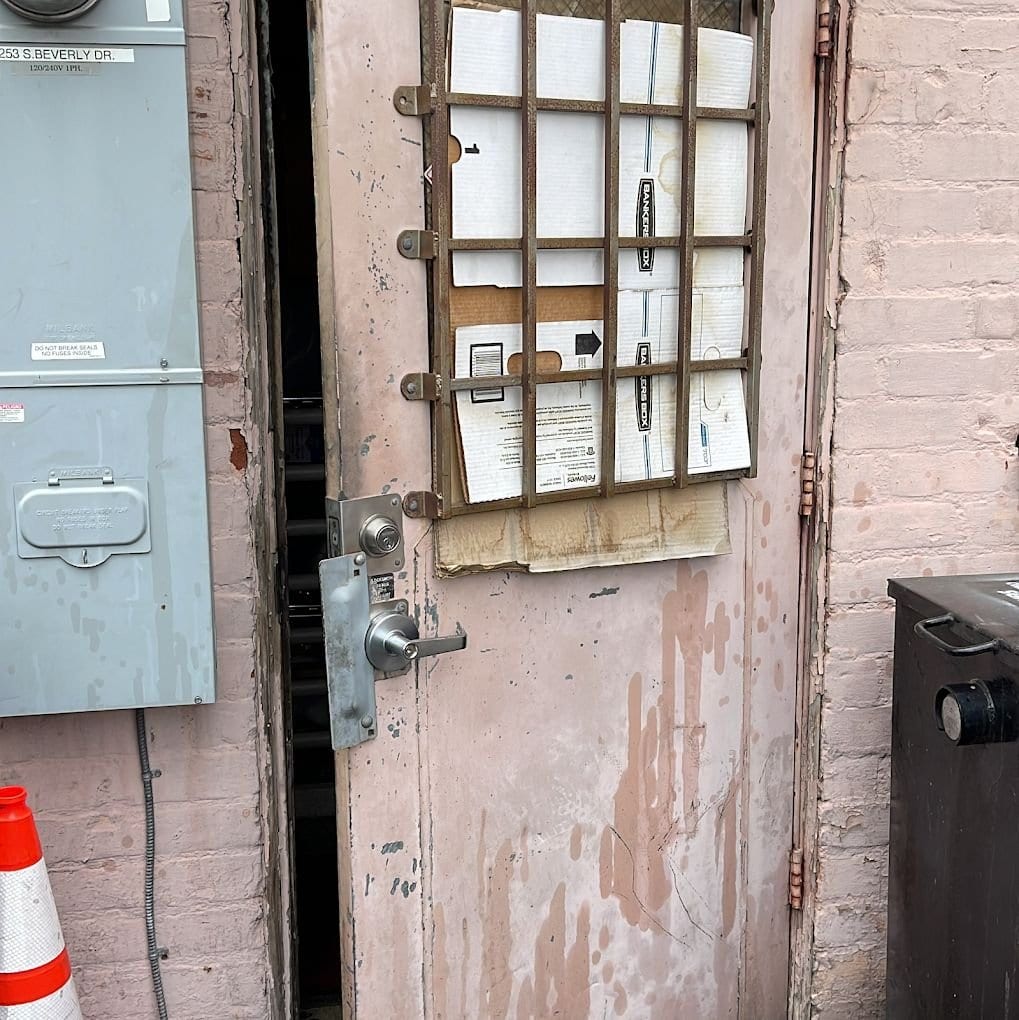
Locksmith Guarantee operates equipped mobile workshops out of 5442 Stream Bank Ln, Greenbelt, MD 20770 under Maryland License #507 (about Locksmith Guarantee). For panic bar and emergency exit devices, we verify identify rim, mortise, or vertical-rod hardware and check the bar, latch, and strike before recommending repair, rekeying, or replacement.
Browse field examples in the service photo gallery and verified ratings on our Google reviews feed.

Push bars, panic bars, and crash bars are names commonly used for exit hardware that releases a door from the inside. The right device depends on the door and its intended use. Identify rim, mortise, or vertical-rod hardware and check the bar, latch, and strike.
Discuss installation, repair, or maintenance and test the door's release and latching functions. Note the exit device style (rim, surface vertical rod, concealed vertical rod, or mortise), door width (36" vs. 48"), and whether the door carries a fire-exit hardware label (which prohibits mechanical dogging).
Fire-exit hardware sits on fire-rated doors and cannot include mechanical 'dogging' (hold-retracted latches), ensuring the door always latches positively to block smoke and flame.
Hardware is one element; door swing, clear width, closer force, illuminated signage, and local Authority Having Jurisdiction (AHJ) code rules govern overall compliance.
A hardware change alone does not establish code compliance; occupancy, fire rating, and applicable requirements must be considered. Under Maryland Locksmith License #507, photo ID and proof of ownership or management authority are verified on-site before work begins.
Cost depends on existing hardware or vehicle security condition, required parts, and labor scope. Your technician inspects the issue at your Maryland address and confirms the total price before you authorize work.